Healthy eating doesn’t have to be complicated, and foods like millet dosa are proving just that. This simple, light, and nutrient-rich dish is now becoming a favorite among people looking to manage weight, improve gut health, and stabilize blood sugar levels. The rise of millet-based meals aligns perfectly with modern wellness goals, especially for those focused on sustainable eating and lifestyle balance.
With a wholesome combination of protein, fiber, and essential minerals, understanding Millet Dosa Benefits helps you recognize why this ancient Indian recipe is gaining renewed attention. And thanks to options like the Sprouted Jowar Dosa Premix from Truroots by Vrinda, enjoying a nutritious millet dosa every day is easier than ever.
Why Millet Dosa Is Perfect for Weight Loss
One of the biggest reasons people struggle with weight management is uncontrolled hunger and cravings between meals. Millet dosa solves this by providing clean, stable energy and longer satiety.
Key Millet Dosa Benefits for Weight Control
- High fiber content keeps you full longer
- Low glycemic index prevents hunger spikes
- Rich in plant protein supports metabolism
- Low in calories, especially when cooked with minimal oil
- Easy to digest, reducing bloating
These qualities make millet dosa a smart, sustainable choice compared to heavy wheat-based or refined flour breakfasts.
How Millet Dosa Reduces Cravings and Overeating
Modern diets often include foods that digest too quickly, leading to sudden spikes and drops in blood sugar. This triggers cravings and overeating. Millet dosa slows down this cycle.
Why It Keeps You Full
- Fiber expands in the stomach
- Protein stabilizes hunger hormones
- Low-GI carbs release energy slowly
- It avoids post-meal sluggishness
This combination of nutrients helps regulate appetite naturally, one of the strongest Millet Dosa Benefits for weight management.
Millet Dosa Benefits for Blood Sugar Control
People with high blood sugar or those at risk of diabetes benefit immensely from millet-based meals.
How Millet Dosa Supports Healthy Blood Sugar
- Low glycemic index → steady glucose release
- High fiber → slows digestion
- Magnesium-rich → supports insulin function
- No refined flour → prevents sugar spikes
- Better carbohydrate quality
These properties make millet dosa an excellent daily meal option for those who want to avoid sugar fluctuations.
Why Millets Work Better Than Wheat or Rice
Understanding why millets are preferred over traditional grains makes the Millet Dosa Benefits even clearer.
Compared to Wheat
- Millets are gluten-free
- Easier on the gut
- Lesser inflammation
- Lower glycemic load
Compared to Rice
- Higher protein
- More fiber
- Lower GI
- Better satiety
Switching to millet dosa even twice a week can create visible improvements in metabolic health.
Nutritional Breakdown Behind Millet Dosa Benefits
Here’s a look at what powers this dish:
| Nutrient | Benefit |
|---|---|
| Protein | Boosts metabolism and builds lean mass |
| Fiber | Controls appetite, regulates digestion |
| Iron | Improves energy and prevents fatigue |
| Calcium | Supports strong bones |
| Magnesium | Helps regulate blood sugar |
| Antioxidants | Reduce inflammation |
No wonder Millet Dosa Benefits are becoming widely recognized by health-conscious families.
The Advantage of Sprouted Millets in Blood Sugar and Weight Management
Sprouted grains are even more effective for metabolic health.
Benefits of Sprouted Millets
- Improved protein absorption
- Reduced anti-nutrients
- More B-vitamins for energy
- Easier digestion
- Enhanced mineral absorption
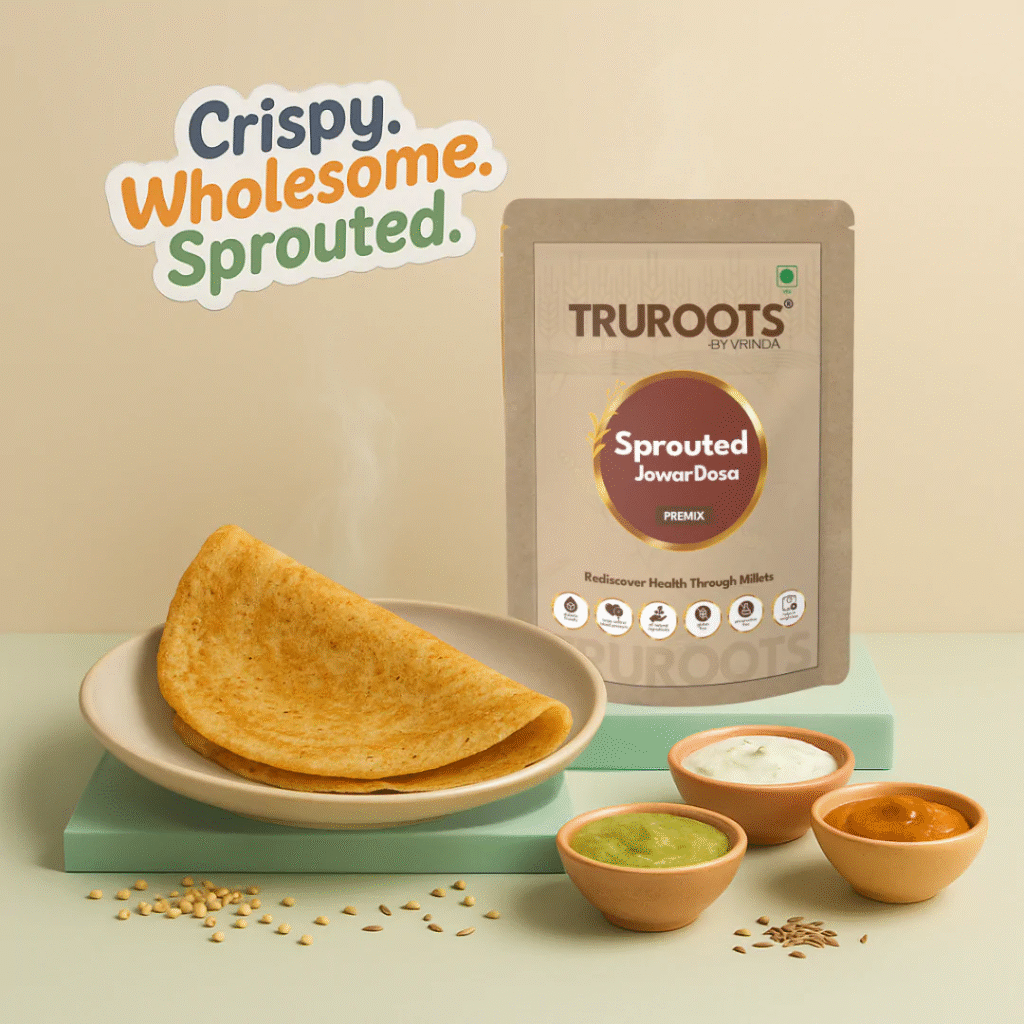
The Sprouted Jowar Dosa Premix brings these enhanced nutrients into your daily meals without effort.
How to Prepare Millet Dosa for Maximum Health Benefits
Preparing millet dosa is simple, but using the right technique makes it even healthier and crispier.
Quick Preparation Steps
- Mix 1 cup premix with 1–1.5 cups water.
- Rest for 2–3 minutes.
- Heat a tawa well.
- Spread a thin layer of batter.
- Cook with minimal oil.
- Serve hot with chutney or sambhar.
Best Millet Dosa Variations for Weight Loss
These tasty variations amplify the health benefits:
High-Fiber Vegetable Millet Dosa
Add spinach, onions, capsicum, carrots, or coriander to the batter.
Enhances fiber + micronutrients.
Protein-Boosted Millet Dosa
Fill with paneer, tofu, or sprouted moong.
Great for weight training days.
Green Detox Millet Dosa
Blend curry leaves, coriander, or mint in batter.
Helps detoxify and cool the digestive system.
Masala Millet Dosa
Use a mildly spiced potato or vegetable filling.
This version still maintains high fiber and low GI.
Why Millet Dosa Fits into Diabetic Meal Planning
People managing diabetes look for sustainable, stabilizing meals. Millet dosa checks every box.
Why It Works Well for Diabetics
- Avoids sudden spikes
- Keeps energy stable
- Reduces cravings
- Supports better insulin response
Its nutrient-dense nature also helps reduce reliance on processed foods.
Millet Dosa for Gut Health and Metabolism
Digestion plays a central role in weight management and blood sugar control.
Gut Health Benefits
- Gentle on the stomach
- Reduces acidity
- Supports gut flora
- Helps regulate bowel movement
- Prevents heaviness after meals
A strong gut boosts metabolism, making Millet Dosa Benefits even more powerful.
Perfect Meal Pairings to Enhance Millet Dosa Benefits
To amplify the nutritional value, pair millet dosa with:
- Coconut chutney → healthy fats
- Mint chutney → digestive support
- Sambhar → protein + fiber
- Curd → probiotics
- Vegetable curry → vitamins + antioxidants
These combinations create a balanced plate for weight loss and metabolic wellness.
Daily Routine Tips to Maximize Millet Dosa Benefits
- Eat for breakfast for stable morning energy
- Use sprouted dosa premix for better digestibility
- Keep oil minimal for weight control
- Pair with low-calorie chutneys
- Rotate with other millet meals for variety
- Add protein-rich fillings on workout days
Consistency is key for steady improvements in weight and blood sugar health.
FAQs on Millet Dosa Benefits
1. Can millet dosa help with weight loss?
Yes. It reduces cravings, improves digestion, and stabilizes hunger.
2. Is millet dosa good for diabetics?
Absolutely. Its low GI and high fiber support excellent glucose control.
3. How often can I eat millet dosa?
Daily or several times a week — it’s clean, nutritious, and balanced.
4. Does sprouted millet dosa improve digestion?
Yes. Sprouted grains are lighter and more digestible.
5. Can kids eat millet dosa?
Yes, it’s rich in minerals and gentle on the stomach.
6. Is millet dosa suitable for dinner?
Yes. It’s light and supports restful digestion.
7. What makes Truroots Sprouted Jowar Dosa Premix special?
It provides enhanced nutrition, convenience, and pure millet goodness.