Jowar benefits are being rediscovered as people return to millet-based diets. Rich in fiber, protein, and minerals, this super millet supports weight loss, energy, and overall health.
Here’s why adding jowar to your daily meals can be a game-changer for your health.
Nutritional Profile of Jowar
Jowar is often called a powerhouse of nutrition. A single serving contains:
- Rich Fiber Content: Aids digestion and weight loss.
- Protein: Helps build muscle and supports energy levels.
- Iron: Prevents anemia and boosts stamina.
- Magnesium and Phosphorus: Essential for strong bones.
- Antioxidants: Protect cells and boost immunity.
Weight Loss and Digestion Support
One of the most celebrated jowar benefits is its role in weight management. Because it is rich in dietary fiber, jowar keeps you full longer, curbs unnecessary cravings, and supports healthy digestion.
Replacing refined grains with jowar-based meals can help reduce calorie intake without compromising nutrition.
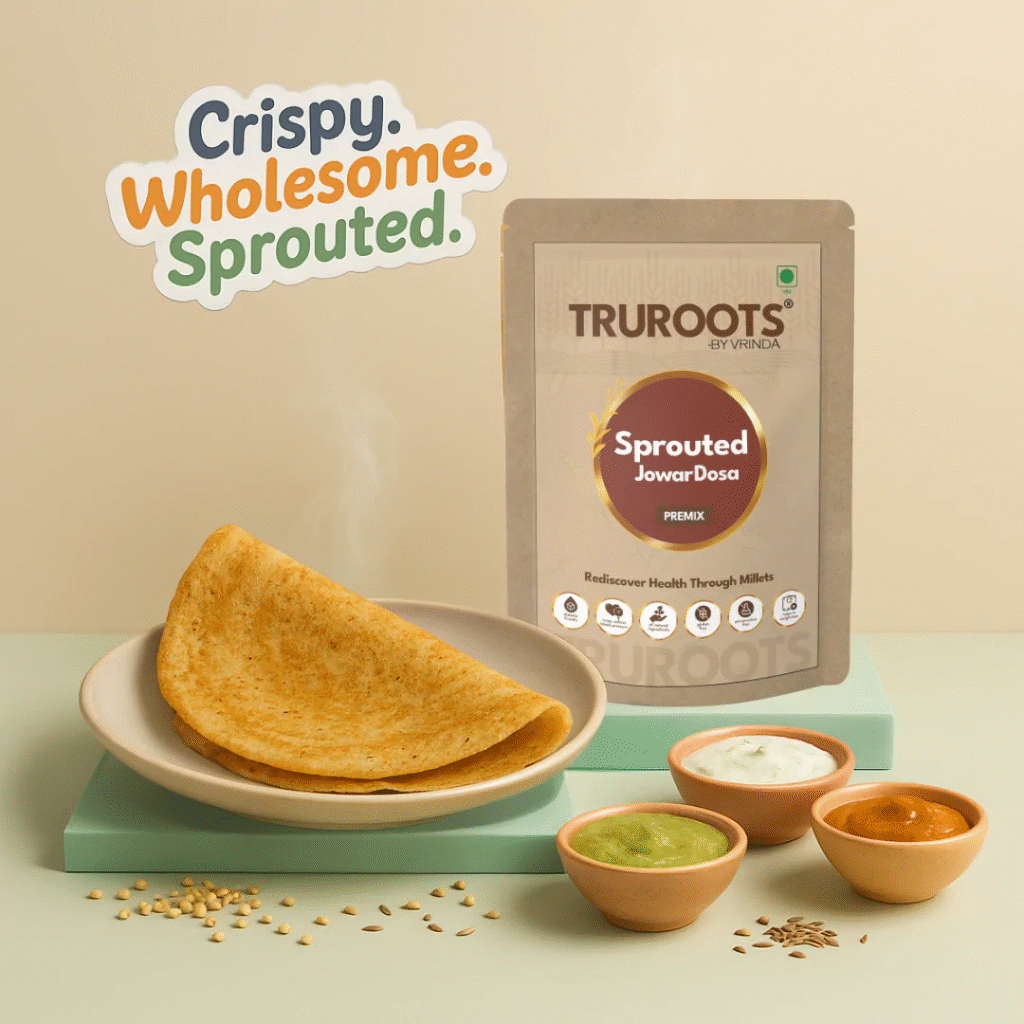
For a quick, healthy recipe, try the Sprouted Jowar Dosa Premix. It’s an easy way to include jowar in your breakfast or dinner. Just prepare the batter, cook crispy dosas, and pair with chutney or sambar for a wholesome meal.
Energy Boosting Properties
Jowar is a complex carbohydrate that digests slowly, ensuring a steady release of energy. Unlike refined carbs that cause sugar spikes, jowar maintains stable energy levels throughout the day.
Athletes, students, and professionals can all benefit from the stamina and mental focus this super millet provides.
For variety, you can also enjoy ragi-based meals that pair well with jowar in a balanced diet. For example, the Sprouted Ragi Oats Chilla Premix makes for a fiber-packed breakfast to keep you energized.

Heart Health and Cholesterol Management
Jowar contains antioxidants such as flavonoids and phenolic acids that promote heart health. Regular consumption may help reduce cholesterol levels, improve blood circulation, and lower the risk of cardiovascular diseases.
Adding jowar rotis or dosas in place of wheat can be an easy step toward protecting your heart.
Diabetic-Friendly Grain
Thanks to its low glycemic index, jowar is excellent for people managing diabetes. It helps regulate blood sugar levels and prevents sudden spikes.
By making simple substitutions—like having jowar upma or dosa instead of rice dishes—you can enjoy tasty meals without compromising your health.
Gluten-Free Alternative
For those with gluten intolerance or celiac disease, jowar is a natural, safe alternative. It can be used to make rotis, dosas, porridge, and even baked goods.
Switching from wheat-based products to sprouted millet premixes can ensure variety in your diet while supporting overall health.
Easy Ways to Add Jowar to Your Diet
- Jowar Dosa: Quick, light, and perfect for breakfast or dinner.
- Jowar Rotis: A great replacement for wheat chapatis.
- Jowar Khichdi: Combine with moong dal and vegetables for a balanced lunch.
- Jowar Porridge: Light and nutritious for kids and elders.
- Healthy Premixes: Use ready-to-cook options like sprouted jowar dosa or ragi chilla to save time without compromising health.
Jowar vs Other Millets – How It Stands Out
While all millets are highly nutritious, jowar has its unique edge:
- Compared to Ragi: Ragi is richer in calcium, but jowar provides more iron and is better for boosting stamina.
- Compared to Bajra: Bajra is excellent for winter meals and warmth, while jowar is versatile for year-round cooking.
- Compared to Foxtail Millet: Both are great for weight loss, but jowar’s higher fiber makes it more filling.
By combining jowar with other millets, you can enjoy the complete spectrum of health benefits
Lifestyle Tips for Including Jowar Daily
- Replace Refined Carbs: Swap white rice or maida rotis with jowar-based alternatives.
- Batch Cooking: Prepare jowar flour dough or dosa batter in advance for busy days.
- Experiment with Recipes: Use jowar in soups, porridges, or even baked items like pancakes.
- Combine with Vegetables: Adding veggies enhances taste and nutrition while reducing calorie load.
- Start Small: If you’re new to millets, begin with 2–3 meals per week and increase gradually.
Easy Ways to Add Jowar to Your Diet
- Jowar Dosa: Quick, light, and perfect for breakfast or dinner.
- Jowar Rotis: A great replacement for wheat chapatis.
- Jowar Khichdi: Combine with moong dal and vegetables for a balanced lunch.
- Jowar Porridge: Light and nutritious for kids and elders.
- Healthy Premixes: Use ready-to-cook options like sprouted jowar dosa or ragi chilla to save time without compromising health.
FAQs
Q1. What are the main health benefits of jowar?
Jowar helps with weight loss, boosts energy, supports digestion, improves heart health, and is rich in iron and antioxidants.
Q2. Can jowar help with weight management?
Yes. Its high fiber content keeps you full longer and reduces unhealthy snacking, supporting natural weight loss.
Q3. Is jowar suitable for people with diabetes?
Absolutely. With its low glycemic index, jowar helps regulate blood sugar levels and is a safe choice for diabetics.
Q4. Can jowar replace wheat completely?
Yes, jowar is a gluten-free grain that can substitute wheat in rotis, dosas, and other recipes. Many people use it as their staple grain.
Q5. Who should include jowar in their diet?
Jowar is suitable for all age groups, including children, adults, and seniors. It is especially beneficial for those with gluten sensitivity, weight concerns, or diabetes.