What Makes Ragi a Superfood?
Ragi, or finger millet, is one of the oldest cultivated grains in India. Unlike many refined cereals, ragi is a whole grain packed with calcium, iron, protein, and dietary fiber. Its nutritional profile makes it highly beneficial for children, adults, and seniors alike. What makes ragi unique is its ability to be sprouted, which enhances nutrient absorption and makes it easier to digest.
At TruRoots by Vrinda, the focus is on reviving traditional grains like ragi in modern, convenient formats. By creating clean-label sprouted ragi premixes, TruRoots ensures you can enjoy the health benefits of ragi without spending hours in the kitchen.
Bone Strength and Calcium Boost
One of the greatest health benefits of ragi is its high calcium content. In fact, ragi is richer in calcium than most other cereals, making it excellent for children in their growing years and adults who want to maintain bone health. Regular consumption of ragi helps reduce the risk of osteoporosis and supports dental health as well.
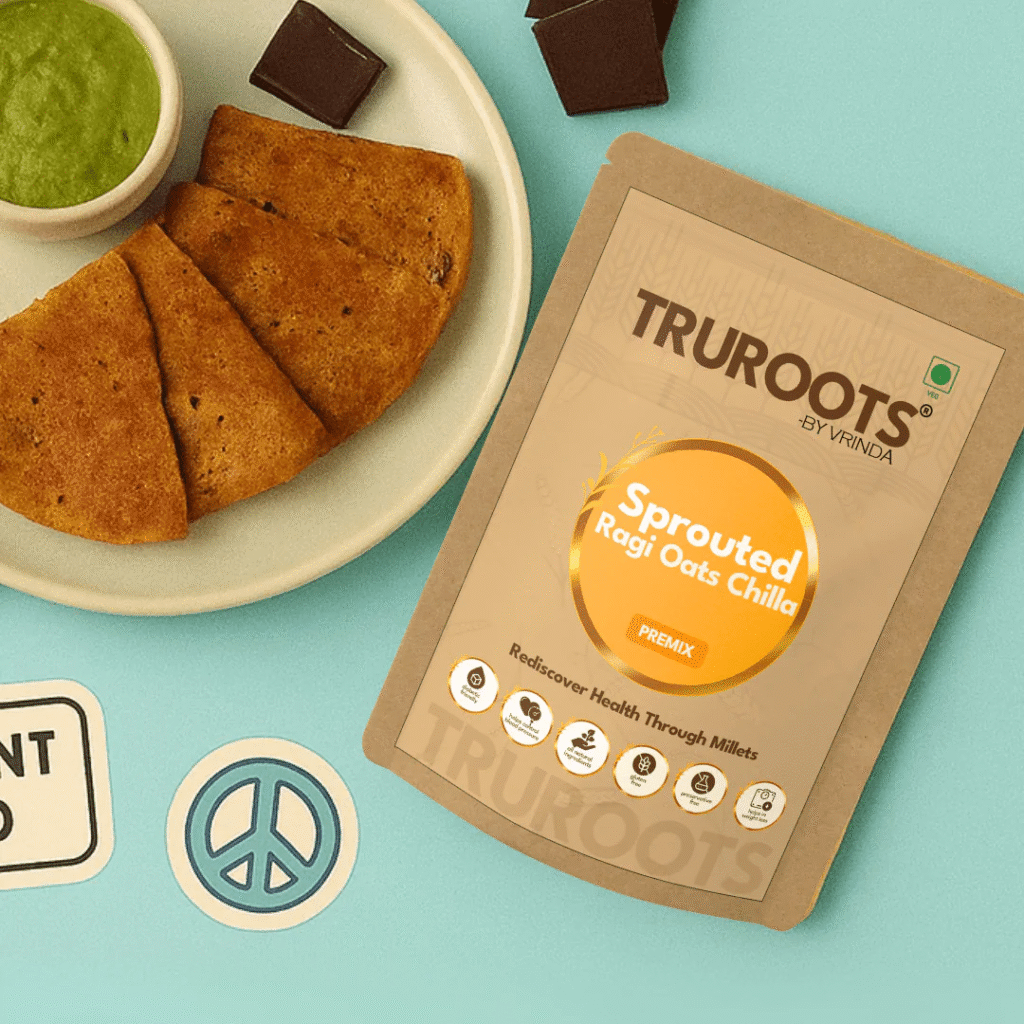
👉 Power your mornings with our Sprouted Ragi Oats Chilla Premix, a protein-packed breakfast that also strengthens your bones.
Weight Management and Satiety
If you’re looking for foods that keep you full for longer, ragi should be at the top of your list. Its dietary fiber slows down digestion, controls hunger pangs, and prevents overeating. Unlike refined carbs, ragi releases energy slowly, ensuring you stay energetic without unhealthy snacking.
This makes ragi an excellent grain for those aiming for weight loss or maintaining a healthy lifestyle without compromising taste.
Managing Blood Sugar Levels
Another vital benefit of ragi is its low glycemic index, which helps regulate blood sugar levels. Unlike rice or wheat, ragi doesn’t cause sudden spikes in blood glucose, making it a safe choice for people with diabetes. The fiber in ragi further supports steady energy release, reducing fatigue and sugar cravings.
Iron-Rich Grain for Better Hemoglobin
Iron deficiency and anemia are common health issues today, especially among women. Ragi is naturally rich in iron and when sprouted, its iron absorption improves even further. Adding ragi to your diet can help boost hemoglobin levels and reduce fatigue.
Pairing ragi with Vitamin C-rich foods like lemon or oranges enhances iron absorption even more, giving your meals an extra nutritional edge.
Ragi for Better Digestion
Digestive health is directly linked to our overall well-being, and this is where ragi plays an important role. Its high fiber content aids digestion, prevents constipation, and supports gut health. Since sprouted ragi is easier to digest, it can be consumed by children, elders, and those with sensitive stomachs.
👉 For a gut-friendly, nutritious treat, try the Sprouted Ragi Hot Chocolate Premix. It’s a wholesome drink that feels indulgent but is naturally good for you.
Ragi for Skin and Hair Health
Beyond internal health, ragi also benefits your skin and hair. Its amino acids help reduce skin aging, while its antioxidants fight oxidative stress. The result is naturally glowing skin and stronger hair. Regular consumption of ragi ensures beauty from within, without depending solely on external products.
Is Ragi Better Than Rice?
Compared to polished white rice, ragi offers superior nutrition. While rice mainly provides carbohydrates, ragi is rich in calcium, iron, protein, and fiber. It delivers long-lasting energy without sugar spikes, making it a healthier staple in everyday meals. Replacing rice with ragi a few times a week can improve overall health without major lifestyle changes.
When Is the Best Time to Eat Ragi?
The best time to consume ragi is during the morning or mid-day meals. This ensures your body receives slow-releasing energy throughout the day. Ragi-based breakfasts like dosas, porridges, or chillas are ideal, while ragi drinks can also be consumed in the evening for a light yet nourishing snack.
FAQs on the Health Benefits of Ragi
Q1: What happens if we eat ragi daily?
Daily consumption of ragi improves bone health, aids digestion, and provides steady energy. It’s safe to eat regularly, especially in sprouted form.
Q2: Is ragi heat or cold?
Ragi is generally considered a cooling grain, making it suitable for summers, though it can be enjoyed in all seasons.
Q3: Is ragi better than rice?
Yes, ragi is better than rice in terms of nutrients. It has more calcium, fiber, and iron, making it a healthier choice.
Q4: What is the best time to eat ragi?
Morning is the best time for ragi-based meals as they provide long-lasting energy and satiety.
Q5: What is the English name for ragi?
Ragi is known as finger millet in English.
Why Choose TruRoots for Your Ragi Needs?
While ragi is widely available, not all products are clean, sprouted, and preservative-free. TruRoots by Vrinda bridges this gap by offering 100% natural sprouted ragi premixes that retain maximum nutrition while being convenient to prepare.
Whether it’s the savory Sprouted Ragi Oats Chilla Premix for a filling breakfast or the indulgent Sprouted Ragi Hot Chocolate Premix for an evening drink, TruRoots makes it easy to add the health benefits of ragi to your everyday meals.