Pesarattu – The Protein-Packed Indian Breakfast That Deserves More Attention
Among the many traditional Indian breakfast dishes, Pesarattu stands out for its simplicity, taste, and nutritional strength. Made primarily from whole green gram (moong dal), it’s naturally high in plant-based protein and fiber. With the right pesarattu mix, you don’t need to soak or grind anything—you get all the health benefits without the prep time.
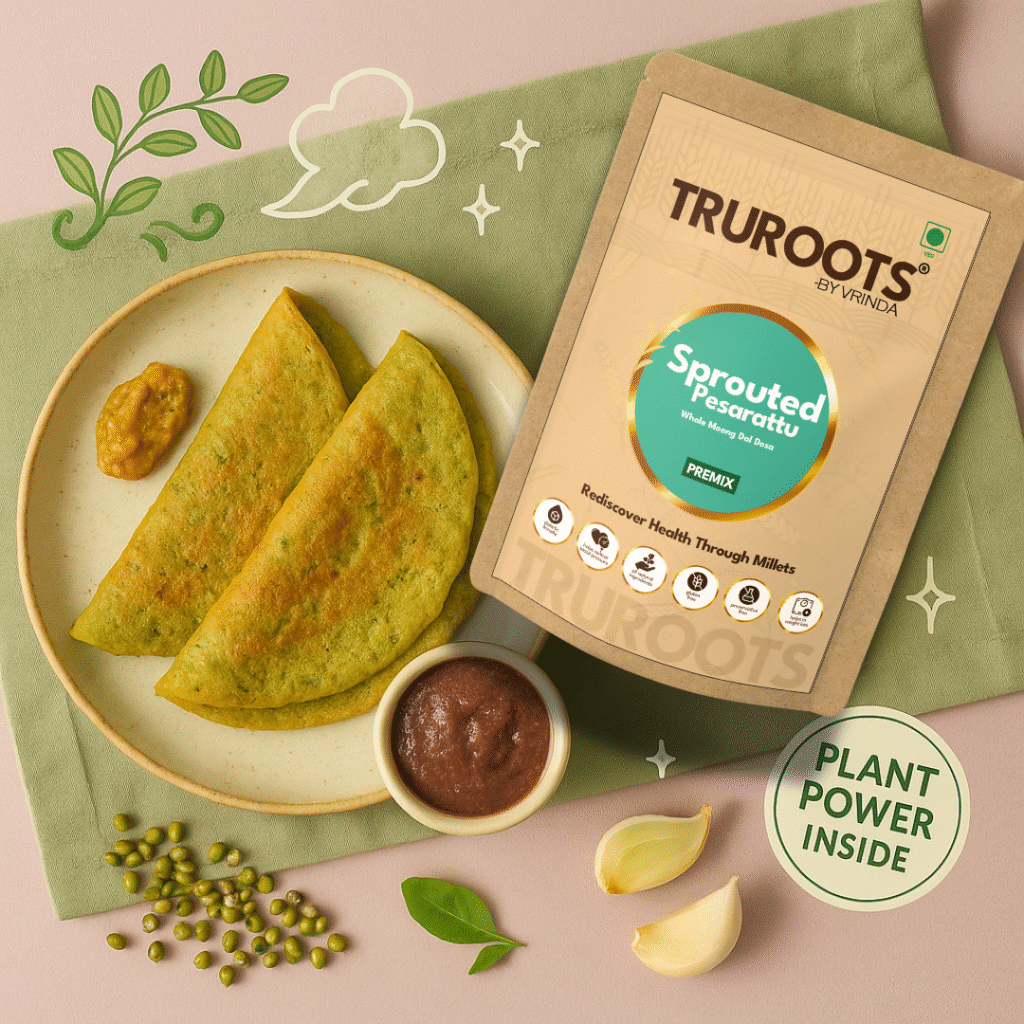
This guide walks you through how to make perfect pesarattu using Truroots by Vrinda’s Sprouted Pesarattu Mix — a ready-to-use blend that combines sprouted green gram with just the right spices and ingredients for a wholesome, filling meal that comes together in minutes.
What Is Pesarattu?
Pesarattu is a traditional Andhra-style dosa made from moong dal, typically served with ginger chutney or upma. Unlike typical dosa batters made from rice and urad dal, pesarattu doesn’t require fermentation, which means it’s quicker and easier to prepare.
What sets it apart even more is its nutrient profile—especially when made from a sprouted pesarattu mix. Sprouting increases the availability of vitamins like B12 and folate, and enhances the digestibility of proteins and minerals.
Why Use a Sprouted Pesarattu Mix?

Sprouting the moong dal used in pesarattu provides multiple benefits:
- Improves digestibility
- Reduces anti-nutrients like phytic acid that block mineral absorption
- Enhances protein and amino acid profile
- Makes the batter quicker to cook and easier to spread
The Sprouted Pesarattu Mix from Truroots by Vrinda makes this process easier by giving you a shelf-stable mix that needs only water and a hot pan.
Ingredients You’ll Need
To prepare the perfect pesarattu using the premix, here’s all you’ll need:
- 1 cup Sprouted Pesarattu Mix
- 1 to 1¼ cups water
- Ghee or cold-pressed oil for cooking
- Optional: chopped onions, green chilies, cumin seeds, grated ginger
Step-by-Step Method to Prepare Pesarattu

Step 1: Mix the Batter
In a mixing bowl, add 1 cup of the pesarattu mix. Pour in 1 to 1¼ cups of water and stir to form a smooth, pourable batter. Let it sit for 5–10 minutes to fully absorb the water and soften the mix.
Pro Tip: The batter should have a medium-thin consistency—similar to pancake batter.
Step 2: Heat the Pan
Use a non-stick or cast iron tawa. Heat it on medium flame. To check if it’s ready, sprinkle a few drops of water—if they sizzle, the pan is ready.
Wipe it down with a damp cloth or paper towel before each dosa to ensure an even, non-stick surface.
Step 3: Pour and Spread
Pour a ladle of batter onto the center of the pan and use the back of the ladle to spread it in a circular motion. You can make it thin for a crisp dosa or slightly thick for a softer version.
Step 4: Add Toppings
Sprinkle finely chopped onions, cumin seeds, grated ginger, or green chili directly on the uncooked side of the dosa. Press them lightly into the batter with a spatula.
Step 5: Cook and Flip
Drizzle a few drops of oil or ghee around the edges. Cook on medium flame until the edges start to lift and the underside turns golden brown.
Flip carefully and cook for another 30 seconds to 1 minute. If you like your dosa crispy, skip the flip.
Step 6: Serve Hot
Serve your pesarattu with coconut chutney, tomato chutney, or a dollop of curd. For a traditional twist, pair it with a scoop of upma inside, Andhra-style.
Customizing Your Pesarattu
Want to add more variety to your breakfast routine? Here are a few variations you can try:
1. Stuffed Pesarattu
Add a filling of sautéed paneer, sprouts, or tofu for a protein-packed meal.
2. Mini Pesarattu Pancakes
Pour small portions of batter into a non-stick appam pan for bite-sized pancakes—perfect for kids or snack boxes.
3. Spiced Pesarattu
Mix spices like black pepper, ajwain, or dry mint into the batter before pouring.
When to Enjoy Pesarattu
- Breakfast: It’s filling, light on the gut, and provides slow-releasing energy.
- Lunchbox: Make it into rolls with green chutney for a mess-free option.
- Dinner: Pairs perfectly with a bowl of warm vegetable soup or sambhar.
- Post-workout: High in protein, especially when paired with chutney or a side of curd.
Benefits of Eating Pesarattu Regularly
Eating pesarattu 2–3 times a week can improve your nutrient intake and digestion. It’s:
- Gluten-free
- High in plant protein
- Rich in fiber
- Full of essential minerals like iron, potassium, and magnesium
- Naturally low in fat and cholesterol
The Sprouted Pesarattu Mix makes it easier to stick to your clean eating goals even on busy days.
FAQs
Q1: Is Pesarattu suitable for diabetics?
Yes. It’s low in glycemic index and rich in fiber, making it suitable for blood sugar management.
Q2: How long can I store the prepared batter?
You can refrigerate it for up to 24 hours. Stir well before using again.
Q3: Can I use this mix for meal prep?
Absolutely. Prepare multiple dosas and refrigerate. Reheat on a pan or wrap them with fillings for quick meals.
Q4: Is this mix kid-friendly?
Yes. It’s mild in flavor and can be made softer for toddlers or kids. Add veggies to increase the nutritional value.
Q5: Where can I buy this pesarattu mix?
You can get it from Truroots by Vrinda’s online store.